College Sports Information Directors of America

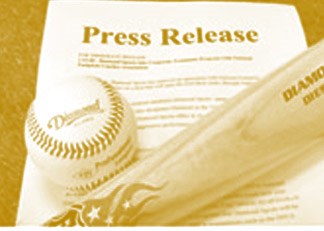
Originally posted by Chris Cook, co-founder and Managing Director of UnLimited Media, at unicornjobs.com (UK website for PR career professionals)
(below is from Cook's blog, Stuff by Me)
see also: Featured How To’s & Quick Tips from PRWeb When Writing a Press Release
So, in my world, if you sit with a bunch of PR people they'll tell you how frustrating and unreliable journalists are, while media people will tell you how frustrating and unreliable PR people can be. As someone who works in both the media and communications industries I can exclusively reveal, you're all useless. No, only joking, you're all brilliant. Mostly.
Though it never ceases to amaze me how many awful press release we get sent through to UnLimited each week, some from very esteemed PR agencies. I don't know what they teach at PR school about press releases, but either half the people working in media relations ignore everything the text book says, or the text book is just wrong.
Perhaps text books say that PR people shouldn't rely on the simple generic press release, and should build personal relationships with journalists and communicate directly with the right hacks for each story. To an extent that's true, but in the real world there will always be times when a generic written statement needs to be sent to everyone on a press list. Plus, when PR people do call me to discuss a story, however enlightening the conversation may be, I'll always conclude by saying "could you send me a release about this?"
So, (many) PR people, you need to write better press releases. And to help, here are my ten top tips, from a journalist's point of view, partly based on my own experience and preferences, and partly on what I've picked up from fellow hacks in those "aren't all PR people useless" chats we've had while your collective backs have been turned. This list was originally published in the esPResso section on the Unicorn Jobs website, but because this is on my own blog, I've reworked it to be less polite!
CHRIS' TEN TIPS FOR BETTER PRESS RELEASES
- 1. Get to the point, fast. What's the story here? That's to say, think about what the 'news story' is that you're communicating, and make sure your opening paragraph is a summary of that story, nothing more nothing less. The story might simply be that you have a product release coming up, or that your company or client is making a corporate statement. If it is that simple, keep your release simple and resist the temptation to make things more complicated than they need to be.
- Two other quick points on getting to the point:
- - If there are a number of news stories in one release (and try not to have too many, just one if possible) separate them out and write a short paragraph about each, with a clear section header and divider, so its obvious where each starts and finishes.
- - If the aim of your press release is to get a review or interview, rather than a news story, then make sure that is obvious from the top – say something like 'review copies available on request' or 'interviews available with Mr X'.
- 2. Adopt a neutral style. An increasing number of websites, and even some newspapers, will take a good press release, do some moderate sub-editing, and publish it as is. This is a great opportunity for a PR person, because it means your company or client's message may be published almost in your own words. However, to enable this to happen you need to use a neutral style of writing – so, no obvious sales speak, not too much jargon (unless it's a press release for specialist journalists) and nothing overly stylized (overly informal, full of metaphor, clever words etc). And keep to the point, and to the real news story - remember tip one!
- 3. Always include a quote. The fact you are releasing a new product, or staging a new offer, or whatever, often isn't really news at all, but if you offer a good quote from a named individual (preferably a senior executive, or anyone associated with your product that is well known) a desperate journalist with space to fill is much more likely to use your release despite the overall lack of newsworthiness. Someone saying something interesting is, in itself, newsworthy, and can make an otherwise dull story worth covering.
- 4. Present lists as a list. If you are providing stats, or data, or lists of names or stores or products, present that information in a simple list, rather than a piece of prose.
- 5. Push anything but the core information into 'notes for editors'. Background information is always useful - key dates, stats and facts will always be appreciated - but, as I said in tip one, push it all to the back of the press release under the heading 'notes to editors'. Everything in the main body of the release should be directly relevant to the main story. Notes to editors can be as long as you need them to be, but try and keep the main body under one side A4 (and no 8 point text to make it fit – you should aim for 12 point text with decent line spacing). With the facts, try and present them in bullet point form, in the style of a Wikipedia entry. Think - what info will the journalist want - not what info do we want the journalist to have which they'll probably ignore.
- 6. Always include a photo (or maybe a link to one). Many news websites need a picture to go with every story (ie their content management system demands a picture), and if you provide one you're saving the journalist work, and they are therefore much more likely to use your release. If you have no picture at all, then a product or company logo will do, though photos are always better. Assuming you're providing a quote, a picture of the person being quoted is always good. Executives who won't have their photos taken for such purposes need to be kicked, hard.
- 7. Keep layout simple and image-lite. It's tempting to spend lots of time making your press release look pretty (pictures, logos, text frames). Don't. Simple text press releases are most user-friendly, and in fact I prefer to have the text of the release in the body of the email instead of in an attached Word document (perhaps include in the body of the email and in a Word document). Oh, and if you do send a Word document, make sure it is an old school .doc file, not a nu skool .docx file. Many people still can't open the latter file type, Microsoft having recently taken us all back to 1998 with regard Word file compatability.
- 8. Always include a date, and make any embargo very clear. If you do need to embargo a press release (ie give a date before which a journalist is not allowed to run a story – normally because you have given a certain publication the exclusive first use of the story, or because the release contains timely sensitive information) make sure the embargo is at the top in bold large type. It is worth resending the release once the embargo has passed (with the embargo removed, obviously) – many journalists will have ignored your release when they saw the embargo and forgotten about it by the time the embargo passes!
- Also, if you are press releasing a product launch make sure launch date information is all clearly given. You'd be amazed how many CDs come to us for review without a release date on the press release. OK, release dates are becoming less important in the record industry these days, but that is still crucial information, and should be in every press release.
- 9. Make sure contact information is correct. Sounds obvious, but you'd be amazed how many times you call the number given on a release and it goes through to the wrong person or department! Make sure the number you give is a manned line (or has relevant voicemail), there's nothing worse than following up a press release and being met with an unanswered phone.
- 10. Distribute internally. Pass copies of your release to your colleagues. It's just a little bit irritating if you call the agency listed as a press contact, only to find that the relevant account manager is on lunch and that no one else knows what you're talking about. Obviously your colleagues won't be able to deal with all media enquiries for your accounts, but at least if they are in the loop they can sound informed and take more effective messages. I'd forward copies of every release to my receptionist too – they are often a media person's first point of call, and it's great if they have an idea of what a journalist is talking about when they answer the phone.
Finally… Less is more. Read and re-read your press release – does everything need to be in there? Simple is always best.
And there you have it. Yeah I know, I sound like a whiny lazy journalist wanting PR people to do all the hard work. Actually I persevere with press releases that break all these rules on a daily basis, but I also know I skip over some, and I also know other journalists who would skip them all, unless the release was about a really big story. So do yourself a favour, follow these rules and you may well find journalists gratefully picking up even the most non-newsworthy stories you shunt in their direction.
Related News
Calendar
Important Dates
All Events +
- 06/23/26 / 11:59 P.M.
M/W At-Large Academic All-America National Ballot Voting Deadline (NCAA, NAIA, College Division)
- 06/30/26 / 11:59 P.M.
M/W Track & Field/Cross Country Academic All-America National Ballot Voting Deadline (NCAA, NAIA)
- 07/07/26 / 12:00 P.M.
W At-Large Academic All-America Announced (NCAA, NAIA, College Division)
- 07/08/26 / 12:00 P.M.
M At-Large Academic All-America Announced (NCAA, NAIA, College Division)
- 07/14/26 / 12:00 P.M.
M Track & Field/Cross Country Academic All-America Announced (NCAA, NAIA)
- 06/07/26 / All Day
2026 CSC Unite Convention in Las Vegas
- 06/08/26 / All Day
2026 CSC Unite Convention in Las Vegas
- 06/09/26 / All Day
2026 CSC Unite Convention in Las Vegas
- 06/09/26 / 11:59 P.M.
Baseball Academic All-America National Ballot Voting Deadline (NCAA, NAIA)
- 06/10/26 / All Day
2026 CSC Unite Convention in Las Vegas
- 06/16/26 / 12:00 P.M.
Softball Academic All-America Announced (NCAA, NAIA)
- 06/16/26 / 12:00 P.M.
M/W At-Large Academic All-District Released; National Voting Begins (NCAA, NAIA, College Division)
- 06/16/26 / 11:59 P.M.
M/W Track & Field/Cross Country Academic All-America Nomination Deadline (NCAA, NAIA)
- 06/23/26 / 12:00 P.M.
M/W Track & Field/Cross Country Academic All-District Released; National Voting Begins (NCAA, NAIA)
- 06/23/26 / 12:00 P.M.
Baseball Academic All-America Announced (NCAA, NAIA)
- 06/23/26 / 11:59 P.M.
M/W At-Large Academic All-America National Ballot Voting Deadline (NCAA, NAIA, College Division)
- 06/30/26 / 11:59 P.M.
M/W Track & Field/Cross Country Academic All-America National Ballot Voting Deadline (NCAA, NAIA)
- 07/07/26 / 12:00 P.M.
W At-Large Academic All-America Announced (NCAA, NAIA, College Division)
- 07/08/26 / 12:00 P.M.
M At-Large Academic All-America Announced (NCAA, NAIA, College Division)
- 07/14/26 / 12:00 P.M.
M Track & Field/Cross Country Academic All-America Announced (NCAA, NAIA)
- 06/07/26 / All Day
2026 CSC Unite Convention in Las Vegas
- 06/08/26 / All Day
2026 CSC Unite Convention in Las Vegas
- 06/09/26 / All Day
2026 CSC Unite Convention in Las Vegas
- 06/09/26 / 11:59 P.M.
Baseball Academic All-America National Ballot Voting Deadline (NCAA, NAIA)
- 06/10/26 / All Day
2026 CSC Unite Convention in Las Vegas
COMMENTARY: Ten tips for press release writing - from a journalist's perspective
College Sports Information Directors of America
Originally posted by Chris Cook, co-founder and Managing Director of UnLimited Media, at unicornjobs.com (UK website for PR career professionals)
(below is from Cook's blog, Stuff by Me)
see also: Featured How To’s & Quick Tips from PRWeb When Writing a Press Release
So, in my world, if you sit with a bunch of PR people they'll tell you how frustrating and unreliable journalists are, while media people will tell you how frustrating and unreliable PR people can be. As someone who works in both the media and communications industries I can exclusively reveal, you're all useless. No, only joking, you're all brilliant. Mostly.
Though it never ceases to amaze me how many awful press release we get sent through to UnLimited each week, some from very esteemed PR agencies. I don't know what they teach at PR school about press releases, but either half the people working in media relations ignore everything the text book says, or the text book is just wrong.
Perhaps text books say that PR people shouldn't rely on the simple generic press release, and should build personal relationships with journalists and communicate directly with the right hacks for each story. To an extent that's true, but in the real world there will always be times when a generic written statement needs to be sent to everyone on a press list. Plus, when PR people do call me to discuss a story, however enlightening the conversation may be, I'll always conclude by saying "could you send me a release about this?"
So, (many) PR people, you need to write better press releases. And to help, here are my ten top tips, from a journalist's point of view, partly based on my own experience and preferences, and partly on what I've picked up from fellow hacks in those "aren't all PR people useless" chats we've had while your collective backs have been turned. This list was originally published in the esPResso section on the Unicorn Jobs website, but because this is on my own blog, I've reworked it to be less polite!
CHRIS' TEN TIPS FOR BETTER PRESS RELEASES
Finally… Less is more. Read and re-read your press release – does everything need to be in there? Simple is always best.
And there you have it. Yeah I know, I sound like a whiny lazy journalist wanting PR people to do all the hard work. Actually I persevere with press releases that break all these rules on a daily basis, but I also know I skip over some, and I also know other journalists who would skip them all, unless the release was about a really big story. So do yourself a favour, follow these rules and you may well find journalists gratefully picking up even the most non-newsworthy stories you shunt in their direction.
Related News
May 27, 2026
April 29, 2026
April 28, 2026
Calendar
Important Dates
All Events +
M/W At-Large Academic All-America National Ballot Voting Deadline (NCAA, NAIA, College Division)
M/W Track & Field/Cross Country Academic All-America National Ballot Voting Deadline (NCAA, NAIA)
W At-Large Academic All-America Announced (NCAA, NAIA, College Division)
M At-Large Academic All-America Announced (NCAA, NAIA, College Division)
M Track & Field/Cross Country Academic All-America Announced (NCAA, NAIA)
2026 CSC Unite Convention in Las Vegas
2026 CSC Unite Convention in Las Vegas
2026 CSC Unite Convention in Las Vegas
Baseball Academic All-America National Ballot Voting Deadline (NCAA, NAIA)
2026 CSC Unite Convention in Las Vegas
Softball Academic All-America Announced (NCAA, NAIA)
M/W At-Large Academic All-District Released; National Voting Begins (NCAA, NAIA, College Division)
M/W Track & Field/Cross Country Academic All-America Nomination Deadline (NCAA, NAIA)
M/W Track & Field/Cross Country Academic All-District Released; National Voting Begins (NCAA, NAIA)
Baseball Academic All-America Announced (NCAA, NAIA)
M/W At-Large Academic All-America National Ballot Voting Deadline (NCAA, NAIA, College Division)
M/W Track & Field/Cross Country Academic All-America National Ballot Voting Deadline (NCAA, NAIA)
W At-Large Academic All-America Announced (NCAA, NAIA, College Division)
M At-Large Academic All-America Announced (NCAA, NAIA, College Division)
M Track & Field/Cross Country Academic All-America Announced (NCAA, NAIA)
2026 CSC Unite Convention in Las Vegas
2026 CSC Unite Convention in Las Vegas
2026 CSC Unite Convention in Las Vegas
Baseball Academic All-America National Ballot Voting Deadline (NCAA, NAIA)
2026 CSC Unite Convention in Las Vegas
Categories
Most Recent Posts