
CoSIDA 360 Fall 2020 Cover Story: Staying Power
College Sports Information Directors of America


Related Content
- CoSIDA.com/CoSIDA360 Magazine Archive
Note: This story appeared in the Fall 2020 November edition of CoSIDA 360 Magazine. To view the full magazine, click here.
Cover Story
Staying Power
Members give the secret to overcoming obstacles and enjoying a long career in athletics communications.
by Beau White – CoSIDA Director of Creative Services
If you were trying to sum up as succinctly as possible what keeps people in the college athletics communications business, those six words mostly say it all.
If only it were that simple.
We know that each year our business loses great people.
We hate it when good people choose to move on because, most of the time, we think they had to make the difficult decision of choosing between doing what they love (being an SID), and having a life, and it doesn’t seem fair. We should be able to have both.
For the eight people who responded to this story, they’ve been able to figure out how to have both.
And, wouldn’t you know it, most of them have had all the same thoughts that those who left had.
They understand mom and dad guilt. They feel you on the long hours and unfair pay. They know what it’s like to see others getting that promotion and wonder if there is something wrong with them. They’ve dealt with health issues, self-doubt and other personal problems.
And they stayed with their career passion. You can do it too.
What was your first year working in sports information and what year did you get your first full-time job?
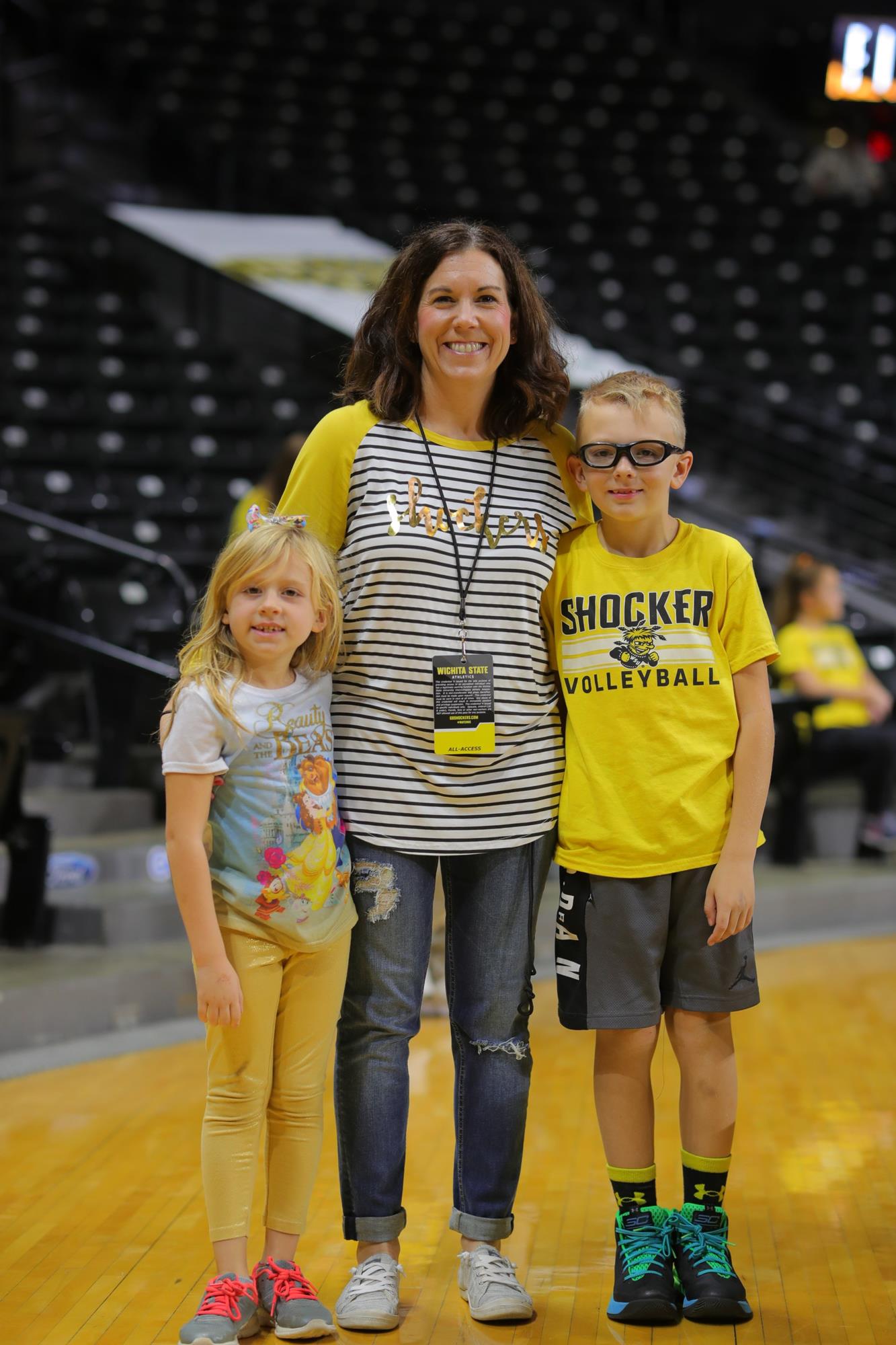
Tami Cutler – Wichita State University, Associate AD/Strategic Communications
My first year working in sports info was 1996 as a freshman in college. I worked for four years as an undergrad at Doane College (now University) in the sports info office and then for two years as a grad assistant at Wichita State before earning a full-time job at Wichita State in 2002.
Sarah Meier – University of Colorado Colorado Springs, Associate Director of Athletics/Senior Woman Administrator
I began as a volunteer student worker with the St. Cloud State University Athletic Media Relations Department in 2000 following my senior season with the women’s basketball program, which then led to a two-year graduate assistantship with the Huskies. My first full-time job was at Fort Lewis College (Durango, Colo.) in August 2002.
Nancy Worley – University of Louisville, Associate Sports Information Director
My first year of working in sports information was an internship in my senior year at Valparaiso. Valpo then hired me after graduation to be the SID and basketball recruiting secretary for the low, low price of $8,000 per year. That is not a typo.
Earl Zukerman – McGill University, Communications Officer, Athletics and Recreation
I started working in the sports info office in 1979, during my senior year of an arts degree at McGill, and never left. I somehow managed to hang in as an intern, initially for eight years as a casual employee, through a series of nine-month contracts. I supplemented my income by working as a waiter in a restaurant and doing some freelance writing and reporting. In 1987, I was finally elevated to the SID level, although was still classified as a casual until a full-time appointment in 1991. Somehow, I managed to survive a lot of hurdles and am now entering my 42nd year at the McGill sports info office.
Chad Jenkins – MidAmerica Nazarene University, Sports Information Director
I started in 2005 as an assistant SID at my alma mater (Bethel-Indiana) while also working as an assistant baseball coach. The head women’s soccer coach was the main SID and covered his own sport in the fall while I did the other sports. Then when soccer was done, he took over everything except baseball. This was when athletics websites were in their infancy, so I was learning as the tech was growing. In 2007, my college baseball teammate/roommate/fellow assistant coach got the head coaching job at MNU, and he wanted an assistant. The university was also wanting to hire its first full-time SID, and my position at Bethel had recently been eliminated, so my wife and 6-week old first child moved from Indiana to Kansas 13 years ago.
Jenny Elder – Georgetown College, Sports Information Director
I was hired as full-time SID at Georgetown College (located in Georgetown, Kentucky) in February of 2010 after spending eight years in the newspaper business mostly as a sports writer, editor and photographer.
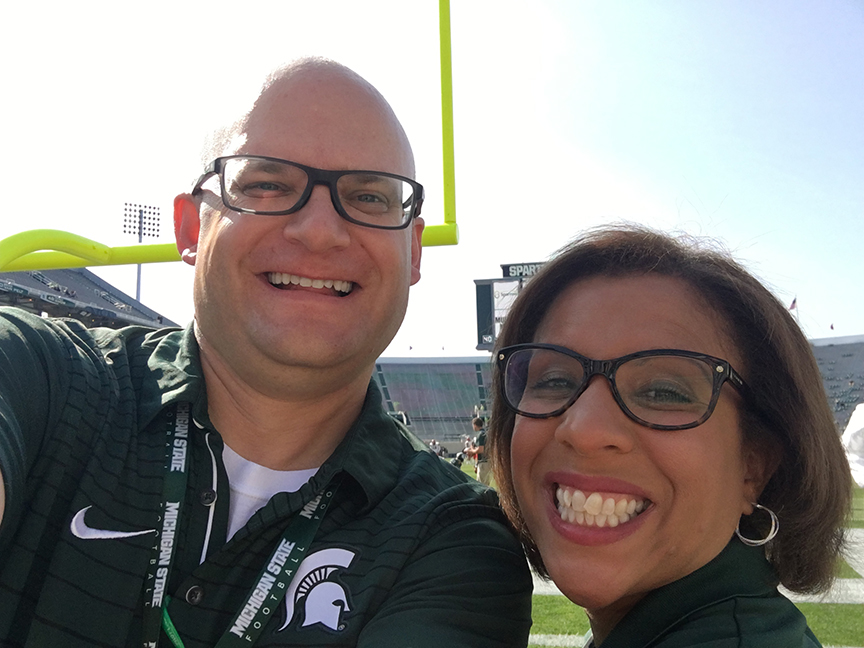
Kara Fisher – Michigan State University, Athletic Communications – Assistant Director
My intern season was the 1997-98 school year at the University of Florida, covering women’s soccer and ANYTHING else that came my way! An internship that paid overtime…WHAT? For my first full-time job, I stayed in the SEC and worked at the University of South Carolina from 1998-2001, doing men’s and women’s soccer and softball.
E.J. Borghetti – University of Pittsburgh, Executive Associate Athletic Director, Media Relations
I first stepped into a sports information office at the start of my junior year at Pittsburgh. Incredibly, that was the fall of 1990. I absolutely loved it from the start. Upon graduation in 1992, I worked as an intern at Columbia University for two years before ultimately gaining my first full-time appointment at Carnegie Mellon in 1995.
When you were in college or just getting started, what were your career goals? Have your goals changed as your career has progressed?
Cutler: When I started college, I wanted to be a sports television anchor. After working in the sports information office for a year, I changed goals to being an SID. As time has gone on, those goals have changed to leading a sports information department, to leading a whole external department and wherever else that takes me.
Meier: When I was on a recruiting visit at SCSU, I met with the athletic media relations director — now-retired Anne Abicht (a CoSIDA Hall of Famer) — and knew from then on working in sports information at the collegiate level was exactly what I wanted to do as a career. My goals haven’t necessarily changed since that visit.
Worley: In college, I was stringing for a lot of newspapers in the area, covering high school basketball. I loved that and that was my goal. However, as the only female sports writer in the area, I had to put up with some inappropriate behavior in the postgame locker rooms, coaches and from my sports writing colleagues. I have a high tolerance for bull**** and am very proficient at putting people straight either with humor or, if necessary, a straightforward assessment of their behavior. But it’s tiresome. I was offered a full-time job at the Hammond Times after I had worked two years in sports information and that made me realize I loved sports information. For my personality, it was a more natural fit to be the promoter of good news and positive portrayals rather than being adversarial as a sports writer/columnist.
Zukerman: My long-term goal was always working in the sports world. I had a strong interest in professional sports and the related statistics but never really knew what I wanted to do for a career until my senior year of college. I answered a classified ad in the student paper seeking a statistician for the varsity hockey team and that led to my discovery of the varsity sports world on campus. I also had an affinity for listening to sports radio and reading legendary sports columnists. As a result, I began writing for The McGill Daily student newspaper. That ignited a passion in me.
I began my sports info career covering the varsity hockey and football teams fixated on getting more media coverage than our opponents, and quickly earned the respect of the sports media. I came to realize this was my path and that I really wanted to be part of the sports media. By working as an SID, I felt attached to that world.
I furthered my education by enrolling into a diploma program for sports administration, followed by a certificate in journalism, advertising and public relations. A course in basic editing and effective written communication proved to be extremely beneficial. It provided the tools to cover numerous pro sporting events as a part-time stringer. Eventually, I landed my own sports show on the radio, which I did for seven years. It gave me access to the press box for all major sporting events, which was my element.
When I took over on a full-time basis at McGill, I was responsible for overseeing media coverage of all 50 varsity teams — a daunting, challenging task. But I was determined to make a difference in our media relations, to be better than any of our competitors and hopefully, force management to elevate my employment status to full-time.
I explored a few other opportunities, in newspapers, radio and with pro sports teams but I was established at McGill and would’ve had to start at a very entry level with a move.
Jenkins: My goals have always been pretty modest. I want time with my family and I want my SID work to be accurate and as well-done as possible. Obviously, there are some busy weeks and seasons that keep me at work for a long time. But during other times, the opposite is true. And summers are light so we take advantage of that. As my career has progressed, family time has become even more important.
Elder: I went to Emory & Henry College with the goals of graduating with a degree in mass communications to be a sports broadcaster. Check and check. Following graduation, I spent a year behind the scenes at a local television station and decided it was not where I wanted to be. I was hired by my hometown newspaper as the first female sports editor and spent the next seven years moving around from paper to paper. I had no desire to be a writer in college. I enjoy telling a story through written word, but was never a huge fan of English in school. I loved math. My path has diverted greatly from where I thought I would be, but in it all I see God’s hand and I’m exactly where I should be.
Fisher: I had the lofty goal of being the first female play-by-play announcer for the St. Louis Cardinals! Very naïve, but I knew that I wanted to work in sports, and had to see how I fit into that puzzle. As I worked through college, I realized that my best fit wasn’t as a journalist, and that’s when I found this craziness that is athletic communications. I loved being behind the scenes and not being the center of attention. Now, I really love helping young people secure their brand and speak for themselves to the best of their abilities. Being “behind the scenes” looks a lot different than it used to and involves a lot more devices, but I still love those basics. Now more than ever, student-athletes have a very strong voice and they deserve to be heard, and I want to help them find that voice. I have spent more time the last few months, helping the Diversity Leadership Committee here at Michigan State, as it navigates the complex waters that we face now.
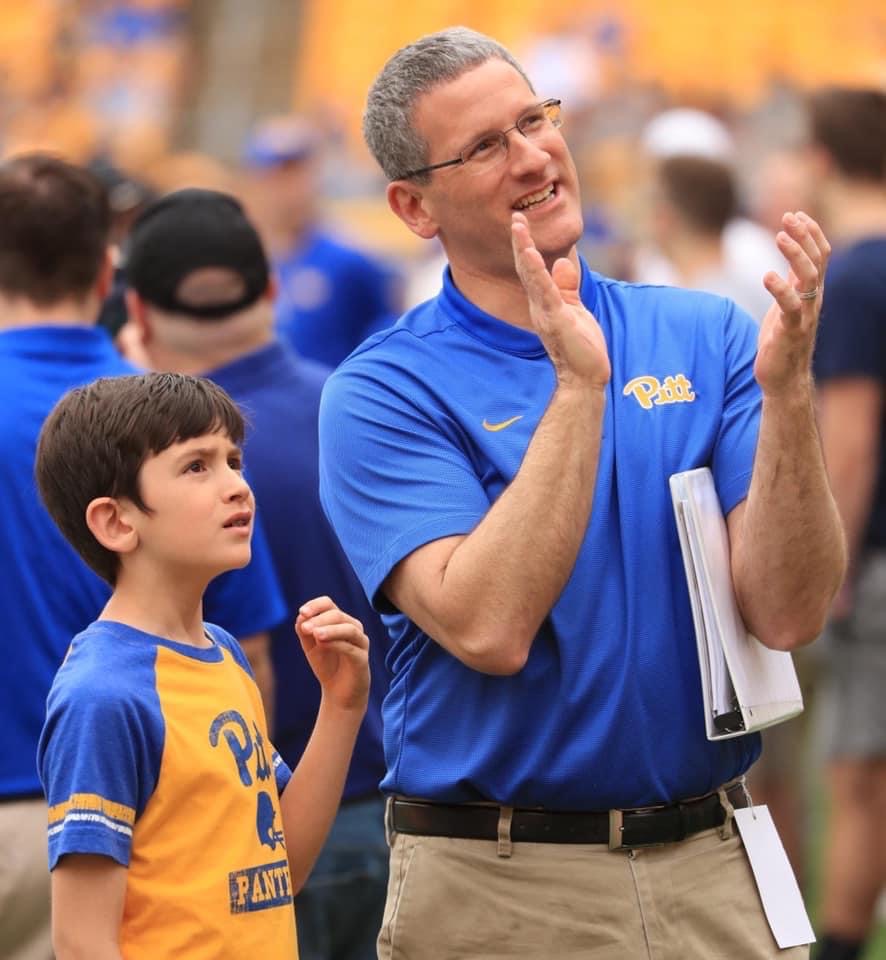
Borghetti: Midway through my senior year, I had a vague idea of going to law school. My dad said to me one day, “Do you really want to go to law school?”
So many people choose career paths because it “sounds good” or it meets someone else’s expectations. He told me to pursue what I was truly interested in and noted my enthusiasm for working in Pitt’s sports information office. A light went on. I finally could write the answer to the question, “What do you want to be when you grow up?” My last semester at Pitt I fully focused on pursuing a career in college athletics from a communications standpoint. I was so lucky to have the mentorship and encouragement that I did, both at home and in Pitt’s SID office.
It was always my goal to come back to Pitt, which is not only my alma mater, but also my father’s. He played football for the Panthers in the early 1960s so I grew up surrounded by Blue and Gold. I was able to achieve that goal five years after graduation and have been richly blessed to work on behalf of the university for the past 23 years. I never aspired to have a corner office or some long title on a business card. My aspirations have always centered on being an asset for the people of Pitt. In retrospect, perhaps that mentality did allow me to make some personal advancements along the way. But to whom more is given, more is expected. Anytime I received a promotion, I didn’t think of it as being about me. I was being charged with a larger responsibility in order to serve our student-athletes, coaches and staff. To whom more is given, more is expected.
I think this is a profession of passion, and if you aren’t passionate about the people and place you are working for, you certainly can lose a spark given the hours and nature of the business. Fortunately, I’ve never lost that drive. That’s more of a positive reflection on the University of Pittsburgh than it is me. I’ve been very fortunate to work for encouraging and supportive people, whether it’s coaches or administrators.
As you look back on your career so far, what has been the most rewarding thing to you?
Cutler: All the relationships that I’ve been able to create. I’ve been lucky to meet people from all across the country and develop friendships with these amazing people; from student-athletes and coaches to grad assistants and full-time employees at Wichita State to SIDs at other schools and local and national media members.
Meier: For me, it’s been the relationships that have been built over the years — with the student-athletes, the athletic department and the campus and town communities. It’s awesome to watch the student-athletes succeed on and off the field and watch them turn into young leaders. It’s been greatly rewarding to have my three kids grow up and constantly be around strong role models (student-athletes, coaches and athletic staff).
Worley: I am a people person and what has been most rewarding is the relationships with the athletes that I have nurtured far beyond their four years. My cell phone contains enough contact information to make our alumni department green with envy. Through social media, I have maintained relationships with all the athletes from the sports I have worked with and that’s the most rewarding. Plus, I’ve had a choice seat to some of the most outstanding games, matches, meets and races in the world.
Zukerman: Making lifelong friends and earning respect from coaches, athletes, my peers in the CoSIDA world and especially in the media.
Jenkins: I feel like my calling is to positively impact whomever I come in contact with while doing this job including student workers, fellow SIDs, coaches, athletes, and others. There shouldn’t be any bad days. So when someone comes away from working a game with me, it’s rewarding when I know someone’s heavy day was lightened. As far as professionally rewarding, MNU women’s basketball winning the NAIA D1 National Championship in 2016 gave me the only concrete goal I ever set. I just wanted the chance to be part of one national championship.
Elder: Seeing and being a part of so many goals accomplished for so many wonderful coaches and athletes, whether it be academically, professionally, on the court/field or personally. Building those relationships and staying in touch with so many wonderful people, even going back to my newspaper days.
Fisher: I have always enjoyed watching the growth of our student-athletes, such as a young freshman —once terrified to talk to a student reporter — who emerges as a well-spoken leader by their senior season. It’s amazing to see these young people reach the next level professionally and find their voice personally. As for myself, I’m proud of the fact that I’ve faced obstacles, such as health and lack of confidence, head on and am still here doing what I love.
Borghetti: When asked what has been most rewarding during my career, I always answer without hesitation: the personal relationships. I’ve been so fortunate to form so many friendships over the years through my work in sports information. Former athletes, bosses, co-workers, and media members. You put so many hours in together. You savor wins, pick each other up after losses. A real bond forms there. Those are the relationships that keep you going, keep you smiling, especially during more challenging times.
```additional content from the original document would continue here in the same HTML formatting style.```