Leadership Traits Needed to Climb the Career Ladder
College Sports Information Directors of America

Related Content
• CoSIDA.com/CoSIDA360 Archive
This story is part of our December 2021 CoSIDA 360 package, to view more stories, click here.
Leadership Traits Needed to Climb the Career Ladder
Three perspectives on identifying leadership traits for today’s athletic communicators and creatives.
by Barb Kowal – CoSIDA Director of External Affairs & Professional Development @austinbarb
The trio of CoSIDA members below, all who started their careers as student workers or assistant sports information directors, currently hold senior leadership positions at their respective universities. They were all asked the same question: You’ve reached a senior leadership position in athletic communications and external relations. What are the soft and hard skill sets that today’s athletic communications professional needs in order to climb the career ladder and assume a top leadership position?
Jason Brough (second from right) celebrating Portland men’s tennis winning the program’s first West Coast Conference title in 2017.
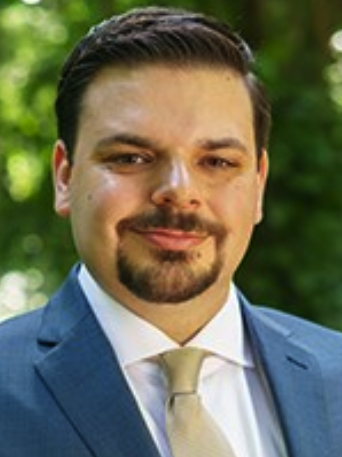
Jason Brough – University of Portland – Senior Associate Athletic Director
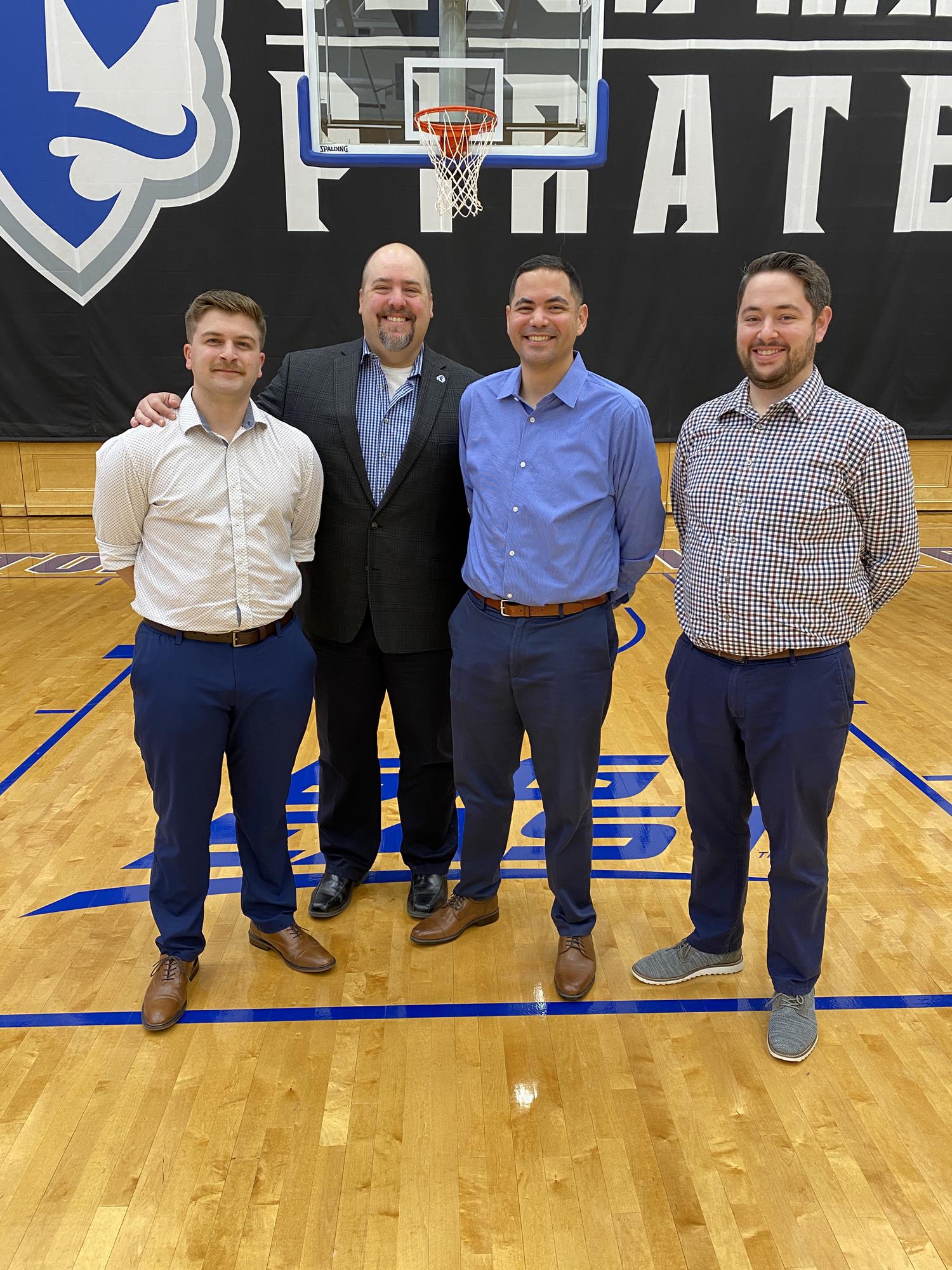
The Seton Hall athletic communications staff: (l to r): Nick Santoriello (Assistant Director of Digital Media & Communications), Matt Sweeney (Assistant AD for Communications), Thomas Chen, and Peter Long (Assistant AD for Digital Media & Communications).
Thomas Chen – Seton Hall University Associate Athletics Director for Digital Media and Communications
I think today’s athletic communications professional should basically be living inside the Adobe Creative Suite. You need to be proficient in writing, layout, designing still and motion graphics, editing video, editing audio, etc.. There are so many mediums and ways to communicate your message, which I know can be overwhelming at times, but it’s important to know a little bit about everything. I think what has helped me in my career is that I didn’t limit myself to writing press releases or some of the other traditional duties. I have always tried to adapt, learn and be of assistance to my fellow external units. This is especially important for people who work at smaller schools with limited resources. The more you’re able to do, I think the more valuable you make yourself in the department.
People who want to climb the career ladder need to have vision, conviction and work ethic. College athletics is a wonderful career, but it’s tough. It’s long hours and in today’s world we’re being asked to do more with less resources. You need to have the vision to see how best you can communicate the message of your athletics department with what you have; you need conviction to stand behind your vision and sell it to your staff and colleagues; and you need the work ethic to execute the vision.
And I can’t stress enough that people need to manage up and empower below. I have a great relationship with my supervisor; we’ve built trust in each other, and that goes a long way. I’m always in his ear about what we’re doing, how we’re doing, sharing our successes and our failures. He comes to me with problems that I help him solve. It’s a great feeling to know that he has my back and will go to bat for me on things that I need. And for folks who lead a staff, you have to give them every opportunity to take on new responsibilities so that they learn and grow. Every good professional in this business craves the opportunity to take on new challenges, and you should want to foster that growth.
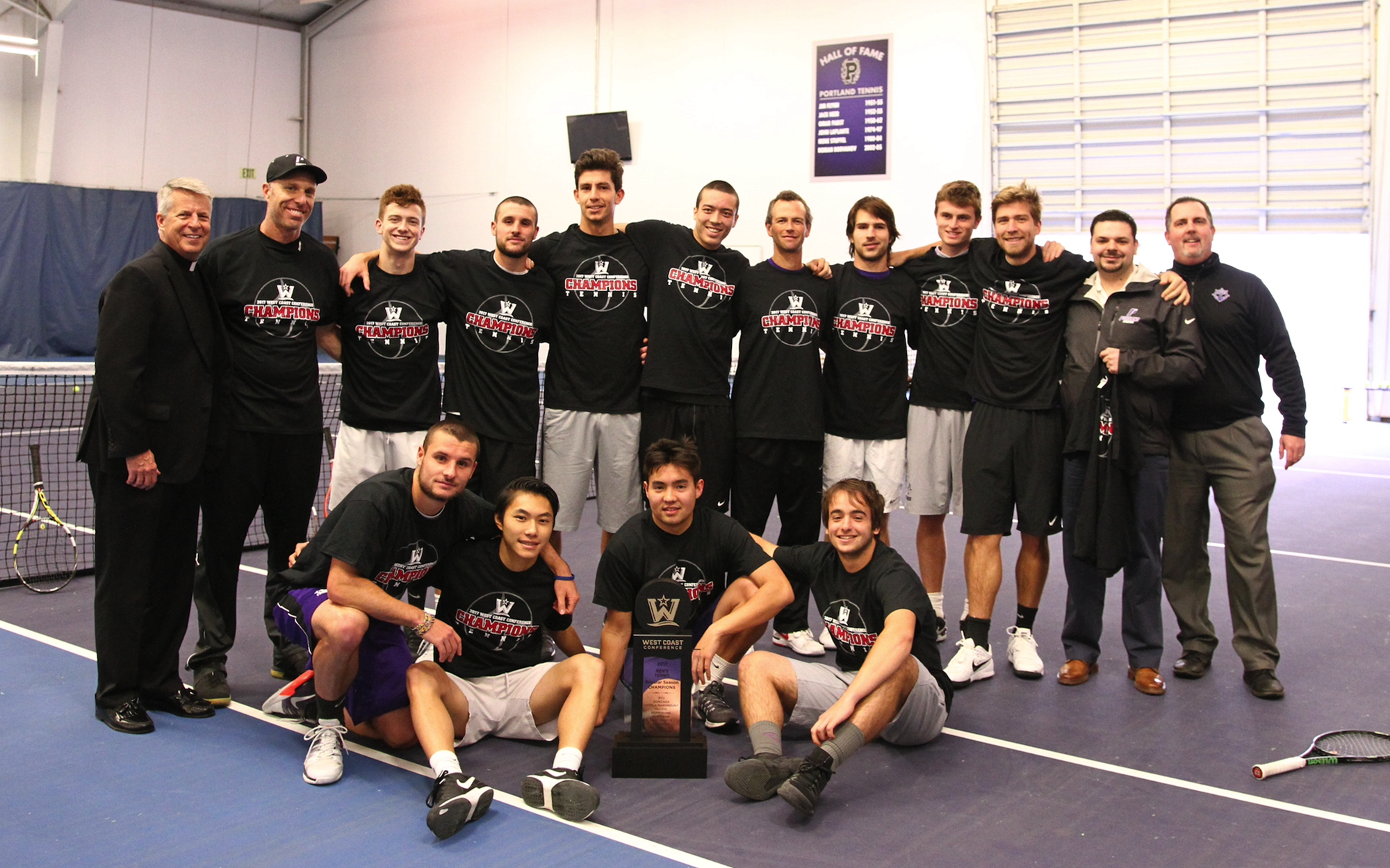
Jason Brough (second from right) celebrating Portland men’s tennis winning the program’s first West Coast Conference title in 2017.
The Seton Hall athletic communications staff: (l to r): Nick Santoriello (Assistant Director of Digital Media & Communications), Matt Sweeney (Assistant AD for Communications), Thomas Chen, and Peter Long (Assistant AD for Digital Media & Communications).
Emily Dorko – Adelphi University Associate Athletic Director for External Relations/SWA
My message to aspiring leaders: it’s important to remember what — or more specifically, who — you do this job for. Communications professionals are here to do just that, communicate; to tell the stories of our student-athletes; it might be a hard pill to swallow early on when you might not be receiving the “thank you’s” from coaches, athletes or other administrators. Yet, if you have a passion for some elements of this job, that passion needs to be your motivation. Know what your motivations are.
Here’s another message that I stress constantly to my staff: at this stage in our industry we are expected to be better than the day before, whether it be in our webcasts, our social media or video content, just to name a few. You can’t expect to be great at all those things all the time because unfortunately, it’s unrealistic for that to be sustainable.
So, how to manage that?
At Adelphi, we’ve gotten our strategy right where we want it in terms of what our office can handle from a creative content perspective and what our expectations are across the board for what we are distributing to our community. I urge others – at every job level - to always be working with others in your department and on campus on understanding the strategies behind your messaging and branding.
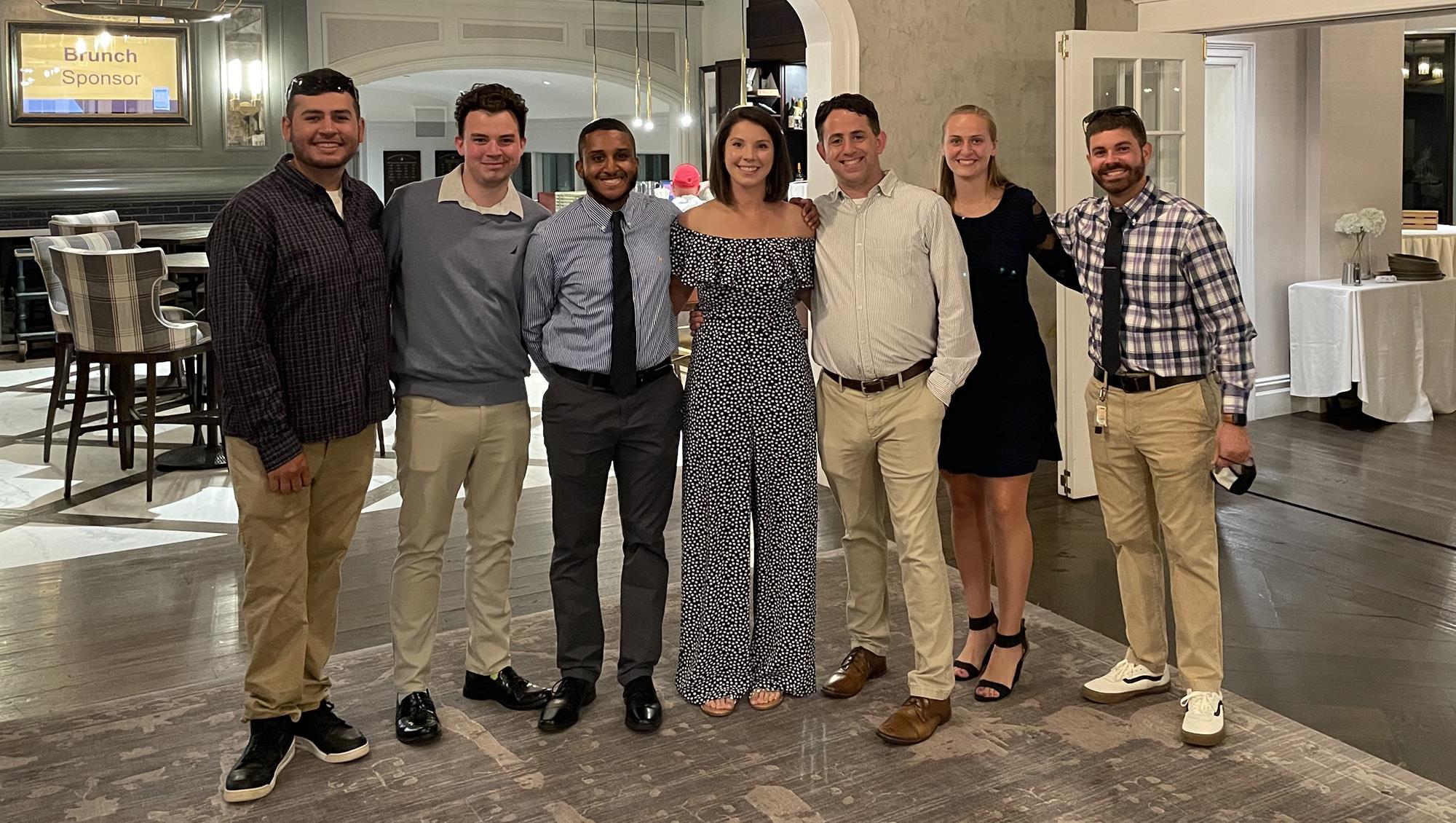
Emily Dorko with members of the Adelphi athletic staff at the 2021 Adelphi Golf Classic.
Dorko received both her undergraduate (2013) and MBA (2015) from Adelphi, and was a two-sport athlete (volleyball and softball), earning First Team All-America softball honors as a senior. She was named Associate AD in February 2017 and then was given added responsibilities as Senior Woman Administrator in November of 2019. She oversees all communication efforts for the department, including the branding and marketing strategy for all social media platforms. Dorko started her career as Adelphi’s SID graduate assistant before serving at NYIT for several years before returning to her alma mater.
Talk about these stories on the CoSIDA Slack Community.